Explore Invisalign costs in Canada and Toronto, including treatment pricing, factors that affect fees, insurance coverage, payment options, and tips for avoiding unexpected expenses.

November 13, 2026
Your Invisalign cost can vary by thousands of dollars even when two Toronto quotes look similar at first glance. One estimate may include scans, monitoring, refinements, and retainers, while another may cover only the core aligner treatment. Insurance can make the comparison harder because reimbursement, out-of-pocket cost, and monthly payments are different numbers. Before deciding whether a clear aligner price is reasonable, you need to know what treatment is proposed, what the written estimate includes, and which expenses could appear later. This guide explains current Canadian and Toronto pricing, the main cost drivers, and the questions worth asking before you commit.
Current 2026 Canadian guides commonly place clear aligner treatment in a broad planning range of about CAD $3,000 to $8,500. Limited cases may be advertised below that range, while complex treatment can cost more.
Treat that range as orientation, not a fee schedule. Sources use different methods and mix simple and comprehensive cases. Invisalign Canada also does not publish one national fee. It says treatment price depends on factors such as case complexity and the number of aligners.
Keep four figures separate:
A hypothetical $6,000 fee with 50% coverage capped by a $2,000 remaining orthodontic maximum would still leave $4,000 before other charges.

There is no official citywide average Invisalign price for Toronto.
Current Toronto-focused estimates vary. One October 2026 estimator places a broad typical range at roughly CAD $4,725 to $10,125, while individual providers advertise their own starting prices or narrower ranges. These are planning references, not Dentistry on King fees.
The final Invisalign cost in Toronto can change with complexity, treatment length, records, monitoring, refinements, retainers, replacement policies, and how each office structures its quote.
A lower starting price is not always the lower total. A quote that includes refinements and retainers may cost less overall than a cheaper quote that prices them separately.
Canadian pricing guides may use names such as Express, Lite, Moderate, or Comprehensive. These describe different treatment scopes, but product naming and availability vary. Dentistry on King does not necessarily offer every category below.
A case that appears minor can require more movement once the bite, roots, and supporting tissues are assessed.
Visible crowding is only one part of an orthodontic plan. Teeth may also need to rotate, close spaces, move vertically, or change their relationship with the opposing arch.
Common cost drivers include:
Two adults can have similar lower-front crowding but very different plans. If one also has a deep overbite requiring movement of back teeth, the treatment scope and clear aligner cost may be higher even though the smiles look similar in a photo.
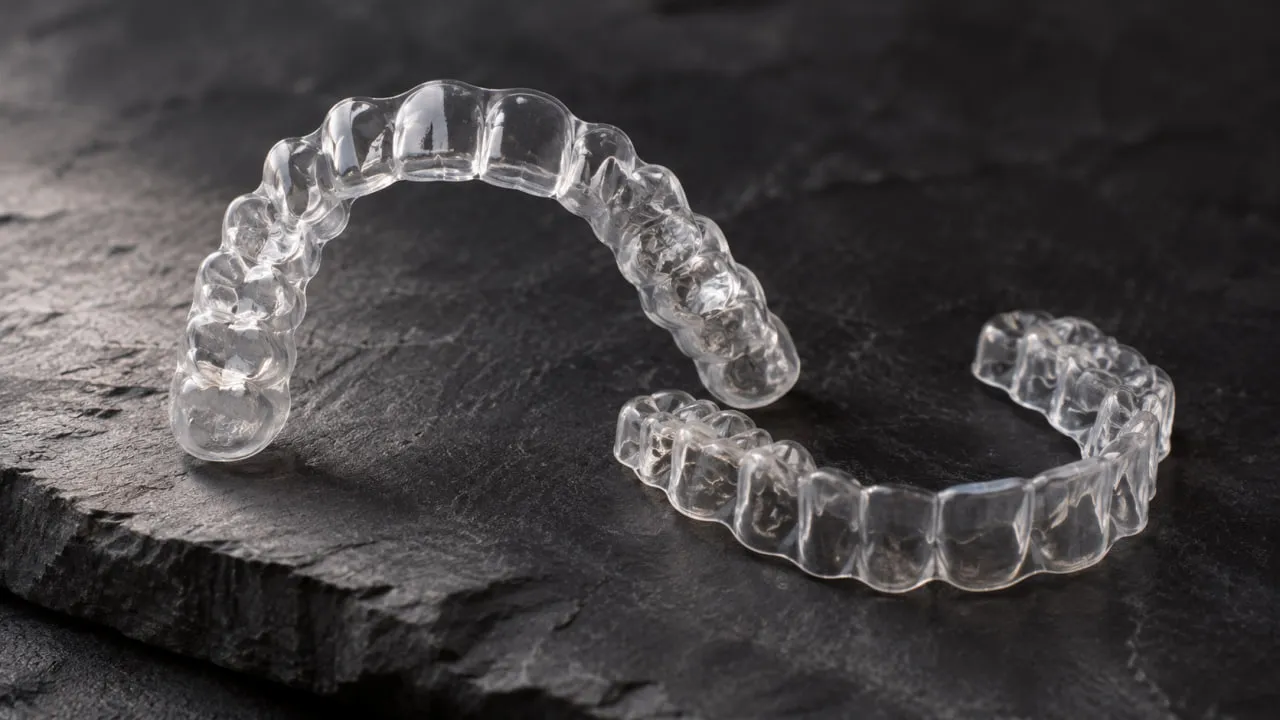
The treatment process helps explain what a quote may include:
Suitability, aligner count, and expected duration come from the individual assessment. Dentistry on King's Invisalign in Toronto page explains its clear aligner service.
Ask for an itemized written estimate. Check whether it includes:
These are categories to clarify, not a promise that every office includes them.
For example, a $5,800 estimate that includes refinements and retainers could cost less overall than a $5,300 estimate that charges both separately. Headline prices are useful only when the treatment scope and inclusions are comparable.
Potentially separate charges can include updated records, lost or damaged aligners, refinement rounds beyond the agreement, additional visits if treatment extends, retainers, or dental work needed before orthodontic care.
Not every extra charge is a "hidden fee." A cavity discovered during assessment is a new clinical need. A predictable cost that was never clarified in the quote is different.
Before accepting a plan, ask which items are included, which are conditional, and which would require a separate estimate.
With Invisalign, trays need cleaning, safe storage, and consistent wear. Lost or damaged aligners may need replacement. Retainers also need care after active treatment and may eventually require replacement.
Braces cannot be misplaced, but brackets and wires can loosen or break, and regular monitoring is still required. Retainers are used after braces too.
Neither option is automatically cheaper to maintain. Compare what each contract includes and how it handles appliance problems, follow-up, and retention.
Treatment length depends on the movements required, biological response, attendance, goals, and adherence.
Invisalign says aligners are typically worn 20 to 22 hours a day. Wearing them less than instructed can affect tracking and may change the plan. Braces do not depend on removable-tray wear, though appliance care and appointments still matter.
Longer treatment does not automatically mean a higher fee. Ask what happens if treatment extends, extra monitoring is needed, or additional refinements are prescribed before comparing two treatment estimates.
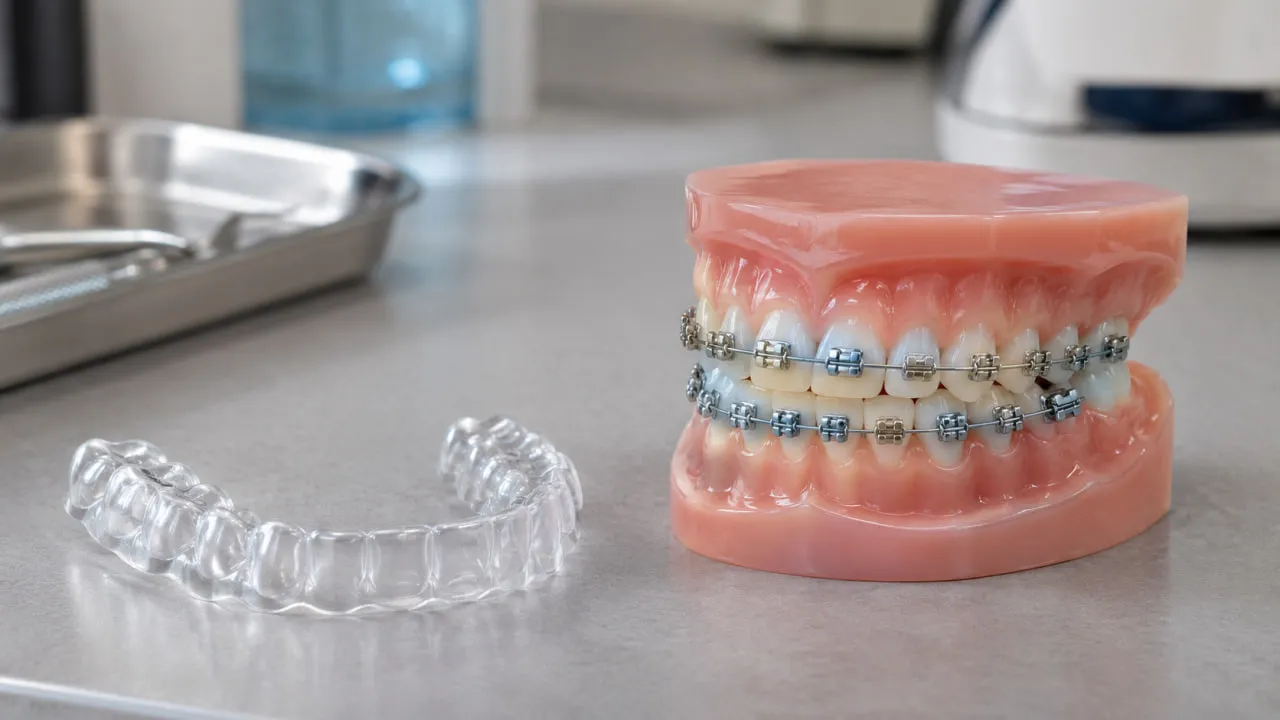
An Invisalign vs. braces comparison only makes sense when both plans aim to treat the same orthodontic problem.
If you are comparing aligners with other orthodontic treatment in Toronto, compare similar clinical goals and check what each estimate includes.
The Invisalign cost in Ontario may be paid personally, partially reimbursed through private benefits, or handled through other payment resources. Verify each option before treatment.
Some plans include orthodontic benefits and others do not. Adult eligibility may also differ from coverage for dependent children.
Check the reimbursement percentage, remaining lifetime orthodontic maximum, waiting periods, and whether a predetermination is required. A predetermination can show what the insurer expects to reimburse, but it is not a guarantee of future payment.
Dentistry on King is a non-assignment practice. Patients pay the clinic directly rather than assigning benefits to the office. The team can help submit claims and, when the policy permits, send them electronically on the patient's behalf. The insurer reimburses the patient after processing.
The clinic's new patient information explains its insurance and payment process.
If your employer provides a Health Spending Account, eligible orthodontic expenses may be reimbursable under that plan's rules and available balance. Not everyone has an HSA, so confirm eligibility with your plan administrator.
Some providers offer installments or third-party financing, but terms vary. Compare the total amount payable, not just the monthly number.
Deposit + monthly payments + interest + fees = total financing cost
Ask Dentistry on King what payment terms apply to your proposed treatment rather than assuming a specific financing offer.
As of November 2026, orthodontic services are not currently available under the Canadian Dental Care Plan. The federal CDCP coverage page lists orthodontic services as unavailable.
CDCP enrollment should therefore not be treated as Invisalign coverage.
OHIP does not cover routine dental services provided in a dentist's office. Invisalign is not an OHIP-insured office dental service.
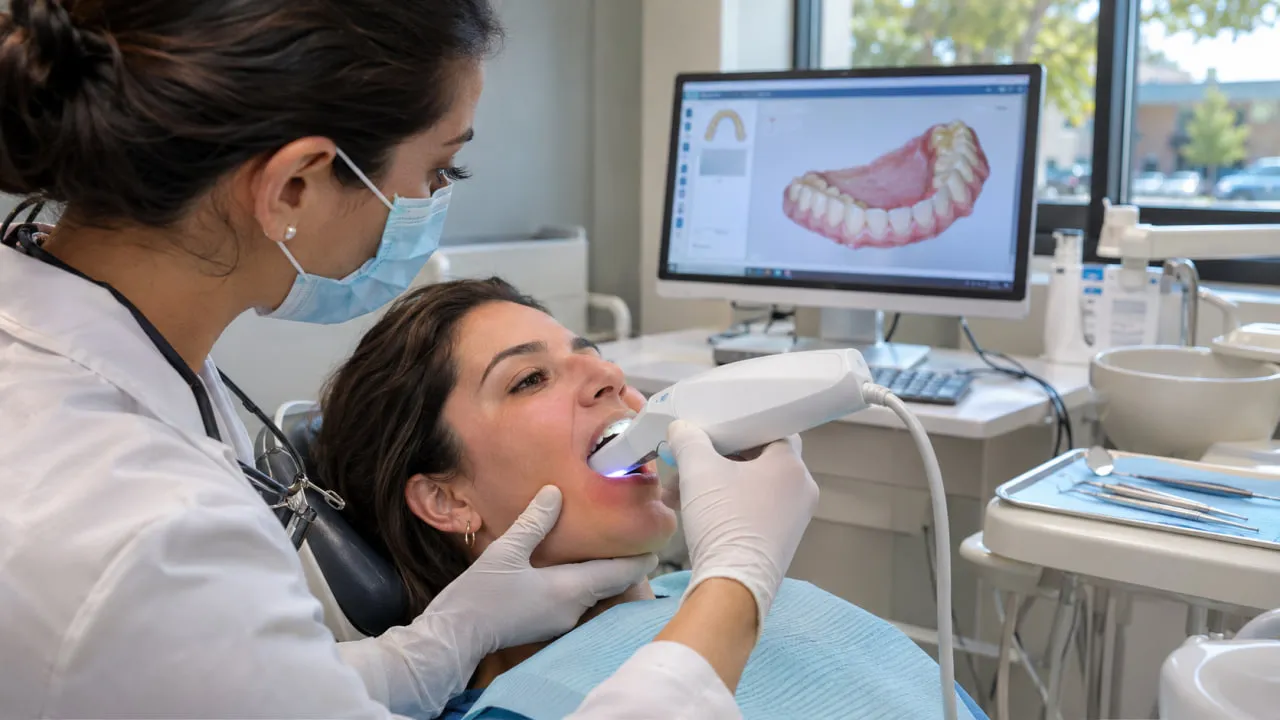
An Invisalign consultation should evaluate more than the front teeth. The visit may include:
If decay or active gum problems are found, they may need care before aligners begin. Dentistry on King's comprehensive dental exam page explains the broader oral-health assessment.
Ask what the quote includes, how refinements and retainers are handled, what happens if a tray is lost, when payments are due, and whether an insurance predetermination can be submitted.

It depends on the treatment plan, your priorities, and the complete written estimate.
Clear aligners are discreet, removable for meals, and allow direct access for brushing and flossing. Those features may matter to someone working in Downtown Toronto or the Financial District.
They also require consistent wear and careful handling. Some orthodontic problems may be better suited to braces or another approach.
Judge value by comparing clinical options, treatment responsibilities, and total costs, not by the initial Invisalign cost alone.
Most unexpected costs start with something that was not clarified before treatment. Use these seven checks.
Put estimates side by side and mark each inclusion as yes, no, or unclear. Ask about every unclear item before comparing totals.
Confirm whether initial records are included and whether new scans or X-rays would be charged separately if the plan changes.
Ask whether extra aligners are included, whether there is a time or round limit, and what happens beyond it.
Clarify whether the first retainers are included and how future replacements are priced. Retention is part of orthodontic care.
Check adult eligibility, reimbursement percentage, waiting periods, and the remaining lifetime orthodontic maximum. Ask whether a predetermination can be submitted.
Multiply the payment by the number of installments, then add any deposit, interest, and fees. Compare that total with the treatment fee.
Ask how the agreement handles lost aligners, extended treatment, extra monitoring, and changes to the plan. Get the terms in writing when possible.
An accurate estimate starts with an assessment, not a price quoted from a photo or phone call. Dentistry on King can evaluate your alignment needs, discuss appropriate options, and explain what a written estimate may include.
The clinic is at 5 King St East, Unit C in Downtown Toronto, directly above TTC King Station at Yonge & King.
Call (416) 368-8000 to arrange a dental assessment.
There is no standard monthly figure. It depends on the treatment fee, deposit, payment term, insurance reimbursement, financing arrangement, and any interest or fees. Compare the total amount payable rather than the monthly installment alone.
No. OHIP does not cover routine dental services provided in a dentist's office. Invisalign is not an OHIP-insured office dental service, so patients generally rely on personal funds, eligible private benefits, or other payment resources.
Some providers advertise limited treatment near or below $3,000, but those offers apply to selected cases and may have specific inclusions. A low starting price does not mean your case qualifies or that the figure represents the complete cost.
Different plans can require different numbers of aligners, monitoring visits, refinements, and treatment time. Offices also package services differently. Compare itemized estimates aimed at the same clinical result rather than headline prices alone.
Some private plans include adult orthodontic benefits, while others do not. Coverage may depend on age rules, percentages, waiting periods, and a lifetime orthodontic maximum. Check your plan and consider a predetermination before treatment.
Not consistently. Invisalign Canada says its treatment cost is generally comparable to braces, but fees depend on the case and provider. Compare plans with similar treatment goals and similar inclusions.
A $6,000 quote falls within several current Canadian and Toronto planning ranges, but the amount alone cannot show whether it is good value. Check complexity, treatment scope, records, monitoring, refinements, and retainers before comparing it with another quote.
Sometimes. Some agreements include the first retainers, while others price them separately. Replacement retainers may also be separate. Ask for the retainer policy before treatment starts.
Contact the treating office. Depending on your stage of treatment, the provider may recommend a replacement, the previous aligner, or the next one. Any replacement charge depends on your agreement.
Yes. A second opinion can be useful for a treatment decision of this size. Ask each office for an itemized written estimate and compare plans designed to address the same orthodontic needs.