How much does a dental crown cost in Toronto? Compare crown materials, extra fees, insurance and CDCP rules, and use 7 tips to get a clear, itemized estimate.

November 17, 2026
If your dentist has recommended a crown, your next question is probably: how much will it cost? It's a fair question, and the honest answer is that crown prices in Toronto vary. The material, the tooth, the lab, and any work needed before the crown goes on can all change the final figure, sometimes by several hundred dollars.
This guide explains typical Canadian and Ontario costs, what each crown material offers, what drives the price up or down, and what private insurance and the Canadian Dental Care Plan (CDCP) may cover. It finishes with seven practical tips to make sure your written estimate has no surprises, so you can make a decision based on real numbers rather than guesswork.
A dental crown, often called a cap, is a custom-made covering that fits over a prepared tooth. It restores the tooth's shape, strength and appearance, and protects what's left of the natural tooth underneath. Once it's cemented or bonded in place, a crown covers the whole visible part of the tooth above the gum line, so it takes the force of chewing instead of the weakened tooth inside it.
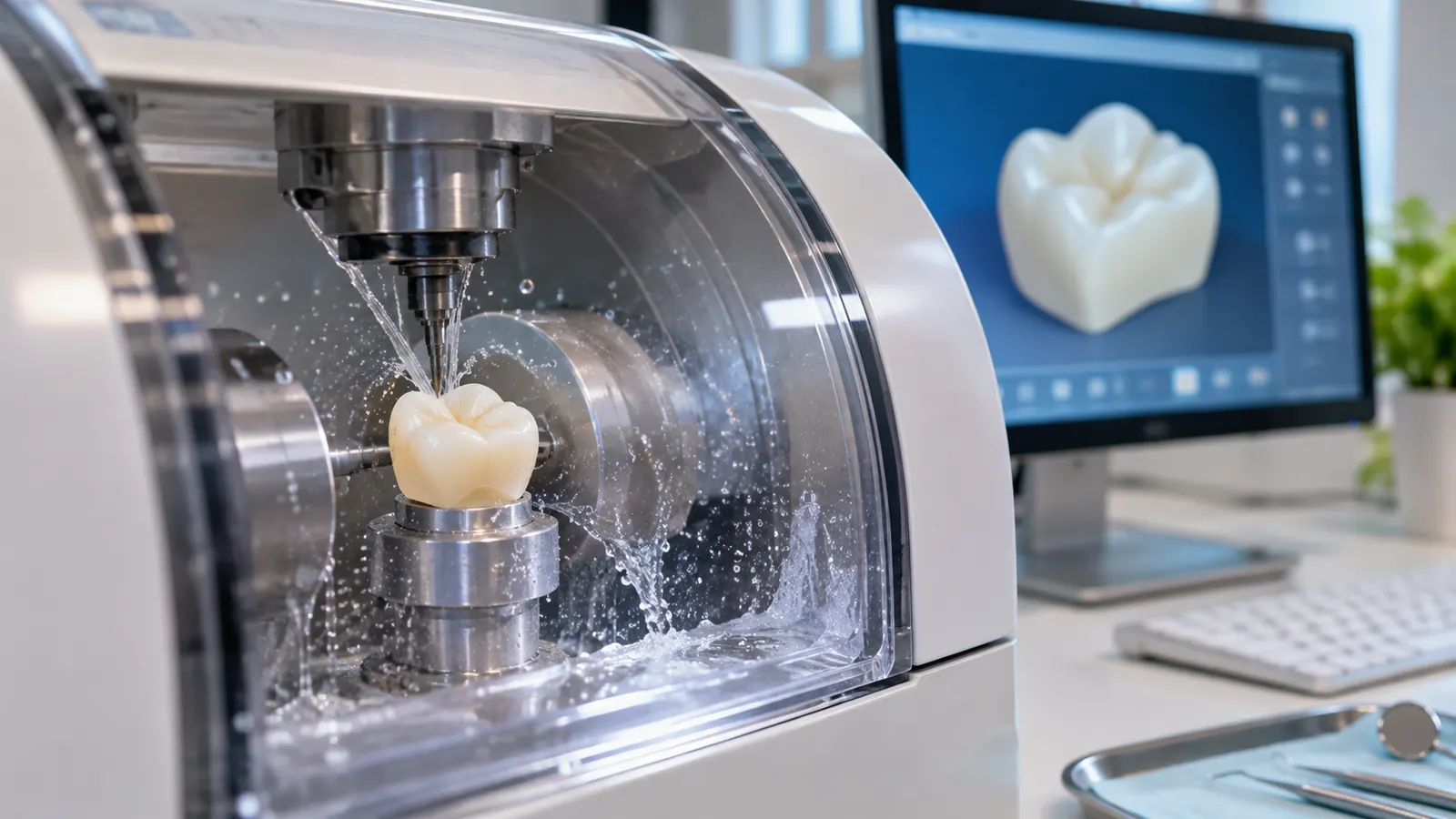
Crowns are made to match your bite and, for most materials, the shade of your neighbouring teeth. They can be made in a dental lab from an impression or digital scan, or, for some teeth, designed and milled in the dental office the same day.
A crown on a natural tooth is different from an implant crown, which sits on top of a dental implant that replaces a missing root. The two are priced and planned differently. This article focuses on crowns for natural teeth.
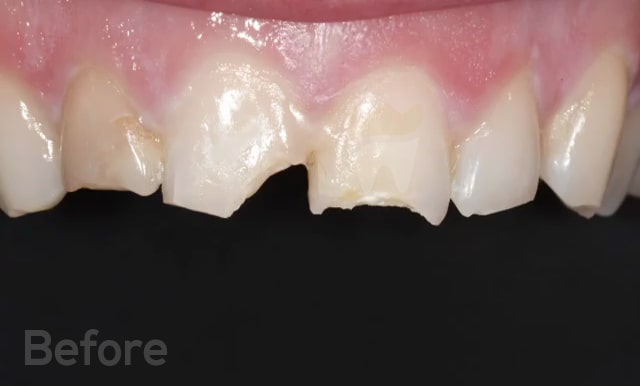
Your dentist may recommend a crown when a tooth:
The common thread is that there isn't enough strong, healthy tooth left for a filling to hold up on its own. A big filling can act like a wedge every time you bite, which may eventually split the tooth. A crown holds the remaining tooth together and spreads the force more evenly.
Not every damaged tooth needs a crown, though. Depending on how much healthy tooth is left, a filling, an onlay (a partial crown that covers only part of the biting surface) or another treatment may be enough. Sometimes a tooth is too badly damaged to be restored at all. An examination and X-rays will show what your tooth needs, and a good dentist will explain why a crown is recommended rather than a smaller restoration.
Canada Life reports a general Canadian dental crown cost range of CAD $900 to $1,500. Its examples from provincial fee guides in 2024 exclude laboratory charges and additional procedures.
These are illustrative numbers, not Dentistry on King's prices. Your actual dental crown cost depends on your tooth, the material and any other treatment you need, and you'll only know it from a personalized written estimate after an examination.
It also helps to know why published ranges differ so much. Some articles quote the crown fee alone. Others include the lab fee, and a few roll in preparation work. Some quote fees from a different province, or even from the United States, where prices and insurance rules are very different. When you compare numbers online, check what each figure includes before deciding whether a quote is high or low.
Published Ontario estimates in 2026 put a typical crown at roughly $800 to $2,000, depending on the material. Toronto fees often fall in the middle to upper part of this range, reflecting higher downtown costs for rent, staff and equipment.
You may also hear about the Ontario Dental Association's suggested fee guide. It's a reference for dentists, not a fixed or mandatory price list, and each practice sets its own fees (Ontario Dental Association). Many insurance plans base their reimbursement on a fee guide, which is one reason your insurer may pay a different amount from what your dentist charges.
A published range is useful for budgeting, but it isn't a quote. Two people having a crown on the same tooth at the same office can receive different estimates if one needs a core buildup or a different material. Treat any range you see, including those in this article, as a rough guide until a dentist has examined your tooth.
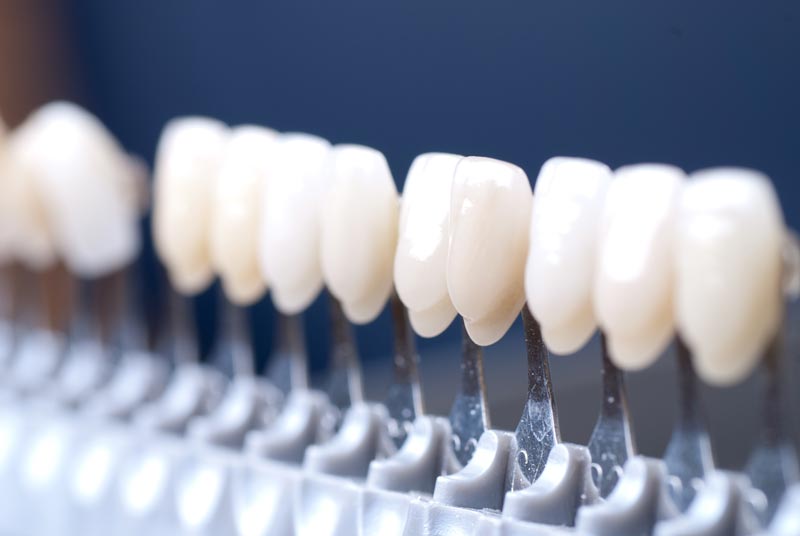
| Material | Appearance | Strength | Often used for | Relative cost |
|---|---|---|---|---|
| Gold and other metal alloys | Metallic | Very strong; gentle on opposing teeth | Back teeth | Moderate to high (gold price affects it) |
| Porcelain fused to metal (PFM) | Tooth-coloured; a dark line may show at the gum over time | Strong | Front or back teeth | Often the lower end |
| All-ceramic or all-porcelain | Very natural | Good, but can chip | Front teeth | Moderate to high |
| Zirconia | Tooth-coloured, slightly more opaque | Very strong | Back teeth, people who grind | Moderate to high |
| E-max (lithium disilicate) | Very natural, translucent | Strong for a glass-ceramic | Front and premolar teeth | Moderate to high |
Here's a little more on each option:
No single material is best for everyone. Your dentist will recommend a ceramic crown, a zirconia crown, a gold crown or another option based on the tooth, how you bite, how it needs to look and your budget.

These variables explain why one patient's estimate can be quite different from another's, even at the same office. If the number on your estimate surprises you, ask which of these factors is driving it. A clear answer is usually easy to give.
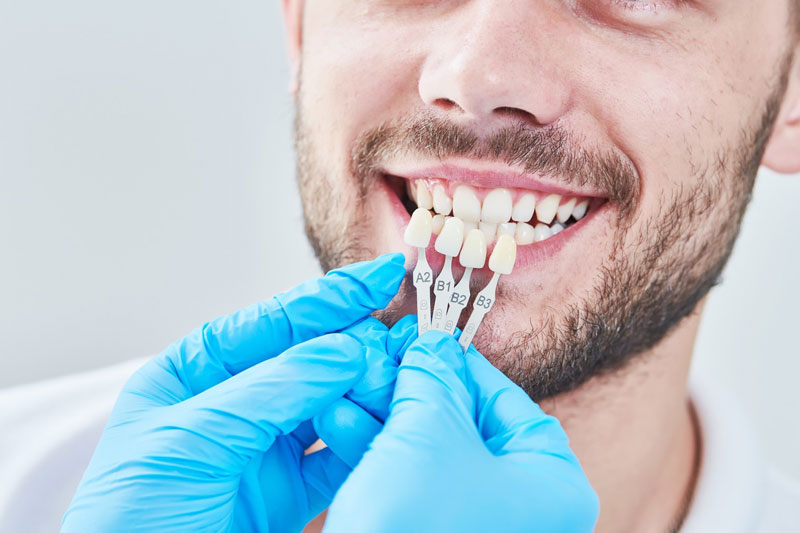
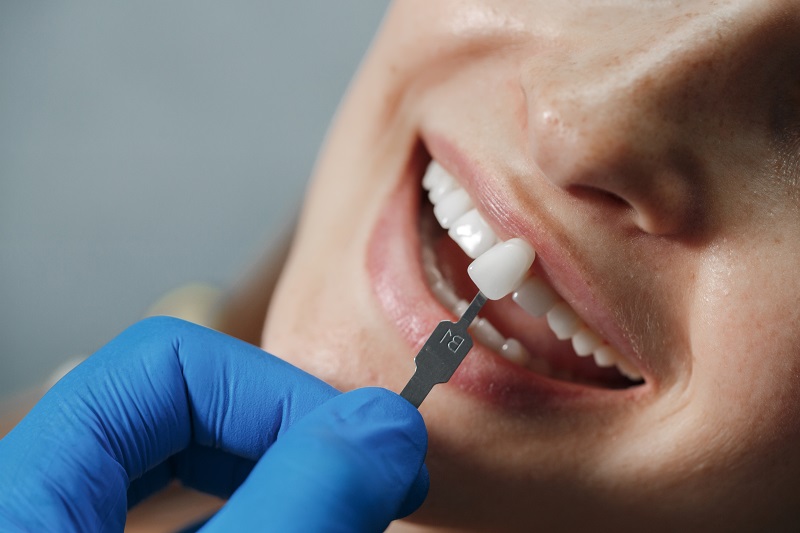
Front teeth are all about appearance: shade, translucency and how the edge looks when you smile. Many people choose an all-ceramic, E-max or zirconia crown without a metal base, and the extra time spent matching the colour and shape to neighbouring teeth can mean a higher fee. A single front-tooth crown is often the hardest to match, because it sits right beside natural teeth that everyone sees. Your dentist may take photographs or bring you back for a shade check.
Premolars sit in between. They're visible when you smile but also take a fair amount of chewing force, so many people choose a material that balances looks and strength, such as E-max or zirconia.
Molars take the most chewing force, so strength matters most. A metal or zirconia crown is often recommended, and a metal edge at the gum line is less of a concern because it's rarely seen. Molars are also more likely to have had root canal treatment or to need a core buildup, which may affect the total cost of treatment rather than the crown fee itself.
How much healthy tooth is left also affects the plan and cost, whatever the tooth's position. That's why front tooth crown cost and molar crown cost can't be given as fixed figures: the estimate depends on your particular tooth.
Depending on your tooth, your estimate may include:
Not every crowned tooth needs a root canal, a post or a core. Your dentist will explain what your tooth needs and why.
The best time to ask about these items is before treatment starts. Sometimes the full picture only becomes clear once old filling material or decay is removed. A good estimate will say which items are certain and which are possible, so you aren't surprised partway through.

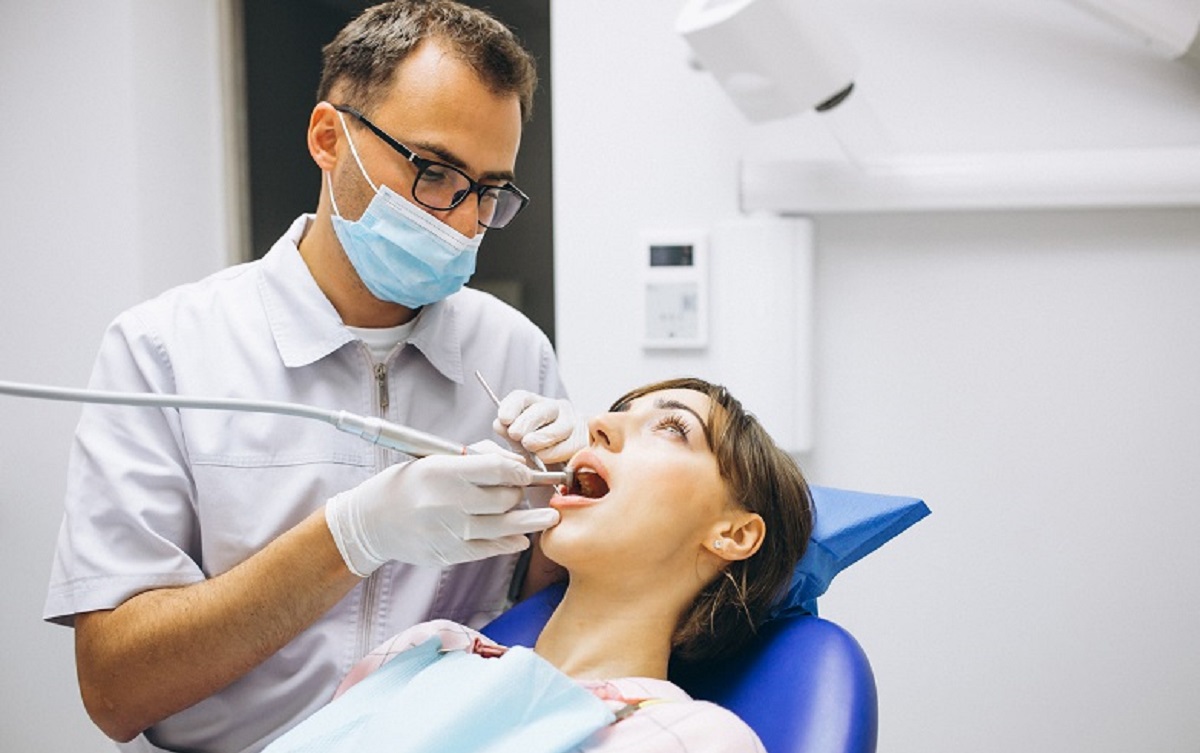
Traditional lab crown (usually two visits):
Same-day CEREC crown (one visit, for suitable teeth): At Dentistry on King, we can design, mill and place some ceramic crowns in a single appointment using CEREC technology. The tooth is scanned digitally, the crown is made in the office, and it's bonded the same day, with no temporary needed. → Learn about CEREC same-day dental crowns
Same-day crowns aren't suitable for every tooth, and choosing one doesn't automatically mean a lower or higher price. A tooth that needs a root canal first, has gum problems or calls for a material that can't be milled in the office may still need the traditional route. Ask your dentist which option fits your tooth.
After either procedure, it's normal for the tooth and gum to feel a little tender for a few days. If your bite feels high or uneven once the freezing wears off, call the office so the crown can be adjusted; this is usually quick.
Crowns are usually covered under the "major restorative" part of a private dental plan, if your plan includes it. Coverage commonly involves:
Check your plan details, and ask your dentist to send a predetermination before treatment. A predetermination shows what your insurer expects to pay for the proposed work, so you can see your share in advance. It usually takes a few days to a few weeks to come back, so ask for it early if you want to plan treatment around it. If you have coverage through two plans, for example your own and a spouse's, ask whether the second plan can cover some of the remainder.
How payment works at Dentistry on King: we're a non-assignment office. You pay us at your appointment, we help submit your claim, and your insurer reimburses you directly based on your plan. Reimbursement isn't guaranteed and depends on your coverage.
Sometimes. Under the CDCP, crowns need preauthorization: your dentist sends clinical information to Sun Life before treatment, and CDCP approves the crown only if it meets strict criteria (CDCP benefits guide). Approval isn't automatic.
If a crown isn't approved, that doesn't always mean you can't have one. You might choose to pay for it yourself, or your dentist may suggest a covered alternative, such as a large filling. Ask about both before deciding.
According to the federal guide, crowns are considered for clients 18 and older, and the criteria include:
Your costs can still include a co-payment, which depends on your adjusted family net income: none below $70,000, 40% between $70,000 and $79,999, and 60% between $80,000 and $89,999. Co-payment percentages are calculated on the CDCP's established fee for the service, not on the clinic's full fee. If an office charges more than the CDCP's set fee, you may also pay the difference (CDCP coverage).
CDCP also works differently from private insurance: participating offices bill Sun Life directly, and patients can't claim reimbursement themselves. Ask any office whether it accepts CDCP before booking.
Without insurance, you pay the full fee, including any preparation, lab work and related treatment. For an uninsured patient, the crown cost without insurance is simply the total on your written estimate, so it pays to understand every line. Ask:
Staging treatment can sometimes spread costs, but only when it's clinically safe to wait. A cracked tooth, for example, may get worse if it's left too long. Your dentist can tell you which teeth are urgent and which can wait.
Dental costs you pay yourself may also count as eligible medical expenses for the federal medical expense tax credit, although work done purely for appearance usually doesn't qualify. Keep your receipts and check the current rules with the Canada Revenue Agency or a tax professional.
If you'd like to spread the cost, ask about:
Financing can make a crown more manageable month to month, but the total you repay may be higher than the fee itself. Compare the full amount, not just the monthly payment, and read the terms before you sign. A health spending account, if your employer offers one, may also help with costs your plan doesn't cover.
We accept cash, Interac debit, Visa, Mastercard and American Express.
A good written estimate lists:
An online price range is a starting point; your written estimate is the number that matters. Keep a copy, and if your plan changes, ask for an updated estimate before treatment continues. If anything on it is unclear, ask before your appointment rather than at the front desk afterwards.
A crown can protect a weak tooth from breaking, restore your bite and improve your smile, and it may save a tooth that would otherwise need to be removed. Replacing a lost tooth with an implant or bridge usually costs more than crowning a tooth that can still be saved, so keeping a natural tooth often makes financial sense as well as clinical sense.
On the other side, the tooth has to be reshaped, which can't be undone. Crowns cost more than fillings, the tooth underneath can still decay at the edges, and crowns may need repair or replacement in the future. Some teeth become sensitive after preparation, and occasionally a tooth that seemed healthy needs a root canal later.
Putting off treatment for a cracked or heavily filled tooth can sometimes lead to more complex and costly care later, such as a root canal or extraction. But a crown isn't a guarantee that a tooth will last forever. Your dentist can help you weigh it up, including whether a smaller restoration might be enough.
The right choice depends on the tooth. Ask your dentist to explain the options they considered and why they recommend one over the others.
Talk to your dentist about:
It can help to ask your dentist why they recommend a particular material over the others for your tooth, and what the trade-offs would be if you chose differently. For example, a stronger material may be the safer choice on a molar if you grind, even if a more translucent one costs about the same.
General guidance like this article is a starting point; your dentist's recommendation is based on your tooth.
Good crown maintenance is simple, but it matters. The crown itself can't decay, but the natural tooth underneath can, especially where the crown meets the gum. At checkups, your dentist will look at the edges of the crown, check your bite and may take X-rays to spot problems before they become bigger ones.
How long a crown lasts varies with the material, your bite, your oral hygiene and whether decay develops around it.
Call your dentist if you notice any of these signs:
Catching a problem early may mean a simple repair or recementation instead of a new crown.

If a crown comes loose, it can sometimes be cleaned and recemented. A small chip in porcelain can sometimes be smoothed or repaired. But if the crown is cracked or worn out, or the tooth underneath has new decay, you'll usually need a new crown.
A replacement is treated like a new crown: your dentist examines the tooth, and your estimate may include removing the old crown, treating decay, or a new core or post. That's why crown replacement cost isn't a set price. The new estimate depends on what's found once the old crown is off, and your insurance may also have its own rules about how often a crown can be replaced.
Need a Clear Dental Crown Estimate?
If a tooth is cracked, heavily restored or damaged, a dental assessment can determine whether a crown or another approach is suitable. Call Dentistry on King in Downtown Toronto to discuss the next steps and ask about a treatment-specific cost estimate and insurance claim assistance.
5 King St East, Unit C, Toronto
A filling repairs part of a tooth. A crown covers the whole visible tooth and is used when there isn't enough healthy tooth left for a filling to be strong.
No. Many crowns are placed on teeth with healthy nerves. A root canal is only needed if the nerve is infected, inflamed or badly damaged.
Not necessarily. Pricing depends on the practice and the material. A same-day crown can save you a second visit and a temporary crown. Ask for an estimate for both options.
Many crowns last ten years or more with good care, but it varies with the material, your bite, your oral hygiene and whether decay develops at the edges.
Keep the crown and call your dentist. Don't glue it back yourself. If you're in pain or the tooth is broken, ask for an emergency dental assessment.
Usually two visits for a lab-made crown, or one visit for a CEREC same-day crown when the tooth is suitable.